Composite siding and fiber cement siding continue to dominate exterior cladding discussions due to their durability and visual appeal. Builders, architects, and homeowners evaluating these systems need clarity on what sets them apart across performance categories. This guide breaks down how composite siding vs fiber cement performs in real-world scenarios and why the distinction matters for long-term results.
Material Composition and Manufacturing Processes
Composite siding is made by blending wood fibers, polymers, and binders into engineered panels. These materials are pressed under controlled conditions to create uniform planks that replicate natural wood grain while improving stability and moisture resistance. The result is a lightweight, dimensionally consistent board that performs well across varied climates.
Fiber cement, on the other hand, is manufactured from cement, sand, and cellulose fibers. These ingredients are cured together to create a dense, non-combustible board that behaves more like masonry. This process delivers impressive fire resistance and weather durability but introduces tradeoffs in handling and install flexibility.
Handling, Cutting, and Installation Factors
Installation behavior reveals some of the most practical differences between these two cladding options.
- While fiber cement siding is strong, it’s also brittle and heavy, which makes it more difficult to cut and carry on-site.
- Specialized saws are needed to reduce silica dust, and cold weather can increase chipping during fastener placement.
- Installers comparing composite siding vs fiber cement will also notice a significant difference in material weight, edge stability, and tool requirements.
Composite siding offers smoother handling for installers. It can be cut with standard woodworking tools and maintains its edge integrity during fastening. Most profiles include integrated gapping or clip-based mounting, reducing the risk of misalignment. These installation efficiencies can lower labor costs and shorten project timelines.
Tools and Jobsite Safety
Both systems demand proper installation practices, but fiber cement introduces added safety requirements. Cutting this material produces respirable silica, which requires the use of dust collection systems and masks. Composite siding does not release hazardous dust when cut, simplifying compliance with safety guidelines.
Moisture Behavior and Water Management
Moisture resistance plays a major role in cladding longevity. Fiber cement resists bulk water penetration due to its density but still absorbs moisture through unsealed edges. This can compromise paint adhesion and accelerate finish wear in damp climates if sealing is neglected.
Composite siding handles surface moisture more efficiently due to its polymer matrix and protective coatings. Many panels also feature back-channeling systems or integrated weep paths to improve drainage behind the cladding plane. These panels promote faster surface drying and reduce water retention behind the cladding plane.
Appearance, Color Stability, and Surface Detail
Aesthetic flexibility is a key differentiator in the composite siding vs fiber cement conversation. Fiber cement typically arrives pre-primed and requires painting. While it offers a strong woodgrain imprint, color variety is limited unless painted on-site or by a prefinisher. Finish longevity depends on climate and paint formulation.
Composite siding offers baked-in color options and a broader range of textures, including smooth, wire-brushed, and rustic patterns. These textures are designed for visual realism. They also provide tactile depth, which improves surface realism at close range. Colorfast treatments reduce fading and eliminate the need for repainting.
Maintenance Requirements Over Time
Ongoing maintenance is another area where material selection has long-term implications. Fiber cement may need repainting every 10–15 years, especially in regions with extreme sun or rainfall. Sealing of cut edges is also essential to prevent moisture wicking. When it comes to lifecycle upkeep, composite siding vs fiber cement reflects a clear divide in repainting needs and surface degradation resistance.
Composite siding typically requires less maintenance. Its surface does not chalk or peel under UV exposure, and periodic rinsing is usually sufficient for upkeep. Since no paint is required, color durability remains high without reapplication or touch-ups.
Durability in Regional Stress Conditions
Each system performs differently when exposed to regional environmental stress. Fiber cement’s mineral composition makes it non-combustible, which is ideal in areas with wildfire exposure or high insurance fire-risk zones. However, its rigidity makes it more prone to edge cracking under freeze-thaw or impact loads.
Engineered siding panels, while not fire-rated to the same level, are more forgiving in impact scenarios such as hail. The layered core absorbs shocks without fracturing. These materials also retain dimensional stability in wide temperature swings, which helps maintain straight sightlines over time.
Thermal Behavior and Insulation Compatibility
Fiber cement provides minimal insulation on its own and must be paired with rigid foam or housewrap systems to improve envelope performance. Composite siding is often available in insulated profiles or pairs efficiently with continuous insulation products. In colder or hotter climates, this added insulation reduces envelope heat loss and improves HVAC efficiency.
Environmental Considerations and End-of-Life Impact
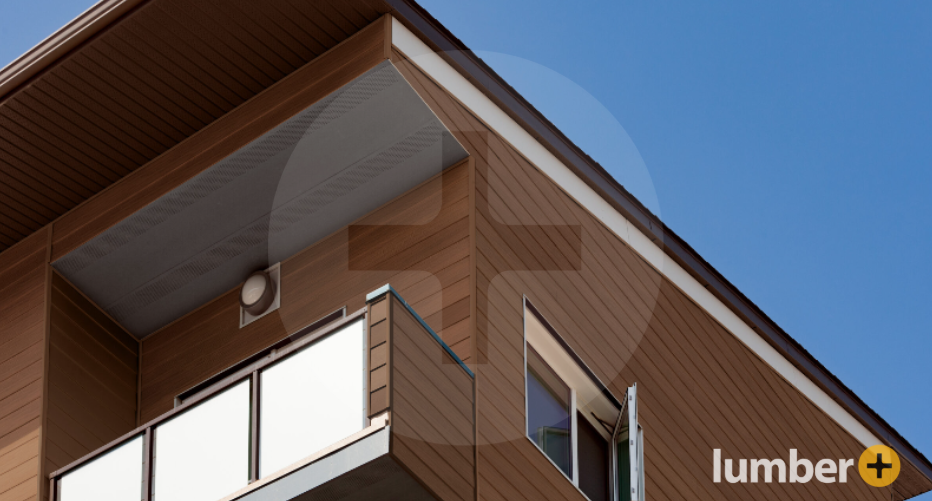
The sustainability profile of composite siding vs fiber cement depends heavily on sourcing and waste handling. Fiber cement uses widely available inputs, but the manufacturing and transport processes are energy-intensive. Cutting waste usually ends up in landfill, and the material is not recyclable.
Some composite siding manufacturers use recycled wood fibers and polymers, lowering raw material demand. These profiles can often be recycled or repurposed, and FSC certification may apply to certain product lines. Lumber Plus offers Norx composite siding collections—Rio, Paris, London, and Rome—each designed to combine durability with aesthetic appeal:
- Rio Collection: Mimics the look and feel of exotic hardwoods, built to withstand everyday challenges with its exclusive GroundGuard™ system that protects against moisture, weathering, and insects.
- Paris Collection: Features Elastic Surface™ technology—a thick elastic and rubber coating that seals and protects, providing an unparalleled experience.
- London Collection: Offers wide slat panels with a unique variegated color and wood grain pattern, designed for easy installation and airflow between siding and joists to prevent moisture buildup.
- Rome Collection: Provides narrow panels with a natural wood-like finish, easy to clean and maintain, suitable for smaller environments and various applications.
Each collection is crafted with sustainability in mind, featuring high recycled content and long-lasting performance.
Cost Factors and Installation Timelines
Installation cost and time can vary significantly. Fiber cement projects often require longer install durations due to cutting complexity and safety protocols. Composite siding installs faster thanks to lightweight handling and simplified fastening systems.
On remodels, composite panels are often compatible with existing sheathing, reducing demo and substrate prep. Builders specify these products in homes and commercial buildings alike due to their consistent finish and install speed.
Choosing the Right Fit for Project Demands
The best siding choice depends on where it’s being installed, who’s installing it, and how the system will perform over time. Project conditions like moisture exposure, fire zone classification, and maintenance expectations should guide material selection. For builders aiming to align performance with application type, the composite siding vs fiber cement decision often comes down to environmental stressors, aesthetic priorities, and installation scale.
Enhance Project Efficiency with Lumber Plus Composite Siding
Lumber Plus offers a curated range of composite siding systems that combine dimensional stability with modern aesthetic control. These profiles replicate the look of hardwood while eliminating the need for repainting or sealing. Contact us today for more information.